ConjugateVerb.com  Portuguese Verb Conjugations

language select icon thanks to english wikipedialanguage
English
Português

ConjugateVerb.com - Conjugate Portuguese Verbs

The purpose of this site is to make memorization of verb conjugations as simple and efficient as possible. We have taken tips and tricks learned throughout the years and organized these memorization aides into proprietary verb charts. The charts show the relationships between the conjugations by organizing related conjugations in specific rows and columns. The site is mobile phone friendly with verb conjugations flowing intuitively rather than forcing you to zoom in and out or swipe back and forth. The best way to show how useful the conjugation layout helps in learning the verbs is to show the following examples:
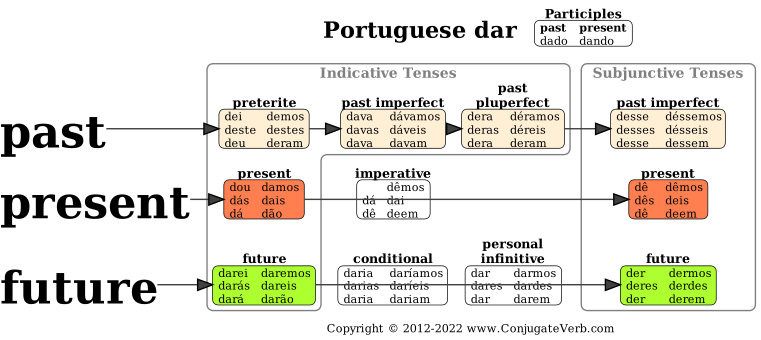
Rows are organized by tense as shown with the 'dar' conjugation

Most Portuguese verb charts already organize the conjugations into indicative and subjunctive tenses, but our charts go much beyond this organization. For example, all the tenses in the past are on the same row. The same is true for the tenses in the present and in the future. The chart flows in chronological order from the past at the top to the future on the bottom. Note that there are some verbs not related to present and future tense that are in these rows but are kept in the rows to keep the size of the chart as small as possible.
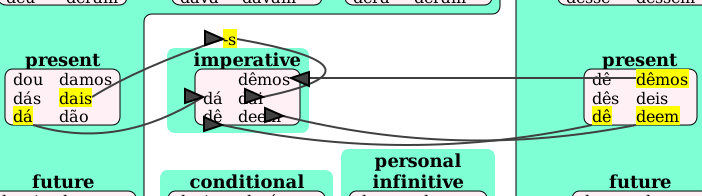
The imperative is a combination of the Indicative present and the Subjunctive present as shown with the 'dar' conjugation

You may have learned to conjugate Portuguese verbs by removing the final –ar, -er, or –ir from the verb and learning all the suffix endings. Then you would memorize all the verbs that are exceptions to the rule. Very quickly you realize that most of the commonly used verbs have exceptions and each irregular verb has dozens of verb conjugations to memorize. Actually there is a pattern to how the verbs are conjugated. You can reduce the memorization of dozens of exceptions per irregular verb to just a few key conjugations and learning the patterns to verb creation.

Como conjugar 'alatinar' e 5000 outros verbos portugueses

ConjugateVerb.com ﹥ Português Conjugador ﹥ -AR | alatinar

language select icon thanks to english wikipedialíngua
English
Português

Conjugação do verbo português 'alatinar'

Particípios

passadogerúndio
alatinadoalatinando
AA

Indicativo

pretérito perfeito
eu alatineinós alatinámos
tu alatinastevós alatinastes
ele alatinoueles alatinaram
pretérito imperfeito
eu alatinavanós alatinávamos
tu alatinavasvós alatináveis
ele alatinavaeles alatinavam
mais-que-perfeito
eu alatinaranós alatináramos
tu alatinarasvós alatináreis
ele alatinaraeles alatinaram

Indicativo

presente
eu alatinonós alatinamos
tu alatinasvós alatinais
ele alatinaeles alatinam
futuro
eu alatinareinós alatinaremos
tu alatinarásvós alatinareis
ele alatinaráeles alatinarão

imperativo

afirmativo
alatinemos nós
alatina tualatinai vós
alatine elealatinem eles
negativo
não alatinemos nós
não alatines tunão alatineis vós
não alatine elenão alatinem eles
condicional
eu alatinarianós alatinaríamos
tu alatinariasvós alatinaríeis
ele alatinariaeles alatinariam
infinitivo pessoal
para alatinar eupara alatinarmos nós
para alatinares tupara alatinardes vós
para alatinar elepara alatinarem eles

Subjuntivo

pretérito imperfeito
se eu alatinassese nós alatinássemos
se tu alatinassesse vós alatinásseis
se ele alatinassese eles alatinassem
presente
que eu alatineque nós alatinemos
que tu alatinesque vós alatineis
que ele alatineque eles alatinem
futuro
quando eu alatinarquando nós alatinarmos
quando tu alatinaresquando vós alatinardes
quando ele alatinarquando eles alatinarem
conjugação de alatinar em português para impressão eco-friendly

*Os verbos são mostrados como:

  1. INFINITIVO + SUFFIX: Por exemplo, o verbo dar tem uma conjugação de dar+ei que é mostrada como darei.
  2. BASE + SUFFIX REPLACEMENT: Por exemplo, o verbo volver tem uma conjugação de volv+eu que é mostrada como volveu.
  3. IRREGULAR: Por exemplo, o verbo pedir tem uma conjugação de peço que é mostrada como peço.